EVC Assistant Mentor @BCC
I returned as an assistant mentor to the Electric Vehicle Conversion (EVC) research project at Bergen Community College (BCC) once again for the summer of 2026. I assisted in writing the engineering report, planning and executing project objectives, and provided mentorship assistance to six student interns.
We set out to convert the gasoline Toro Workman 2100, which sat abandoned and broken with the Horticulture Department, into electric so that they can have a functioning utility vehicle. What’s unique in this year’s iteration of EVC was the ability to conduct pre-conversion tests on its original gasoline form. Previously, there were no test runs conducted for the converted truck and motorcycle. In this case, we restored functionality to the gasoline utility cart and conducted test runs to obtain a number for the well-to-wheel carbon dioxide emissions with and without load. That wound up being 1.09 lbs CO₂/mi without load and 1.20 lbs CO₂/mi with load. Following the conversion, the carbon emissions associated with generating the electricity to power the cart was 0.202 lbs CO₂/mi without load and 0.281 lbs CO₂/mi with load. (The load was 806.5 lbs of stuff loaded onto the bed of the cart.) This showed an 81% reduction in carbon dioxide emissions without load and a 77% reduction with load. Yay!
As for the driving experience, it pulls. We reached a higher top speed with the electric cart at 24.4 MPH. We made it faster. It’s not sluggish to drive either. But don’t expect to race this thing. There’s no suspension, the brakes are awful, and it’s in desperate need of an alignment. The headlights work, but the brake lights and turn signals do not work (yet).
That’s the research-y part of the project. Implementing the conversion process itself was the engineering. The original exhaust, 4-stroke engine, and CVT were removed. We installed a 8.7 kWh LiFePO₄ battery pack, which powered an electric 15 kW PMSM AC motor. The motor directly drove the wheels, in which a shaft coupling was inserted between the motor and transaxle. The team also fabricated an aluminum mount for the motor. When installing the solar canopy, we cut away at parts of the plastic to give the struts clearance. I don’t think it’s very noticeable in the pictures.
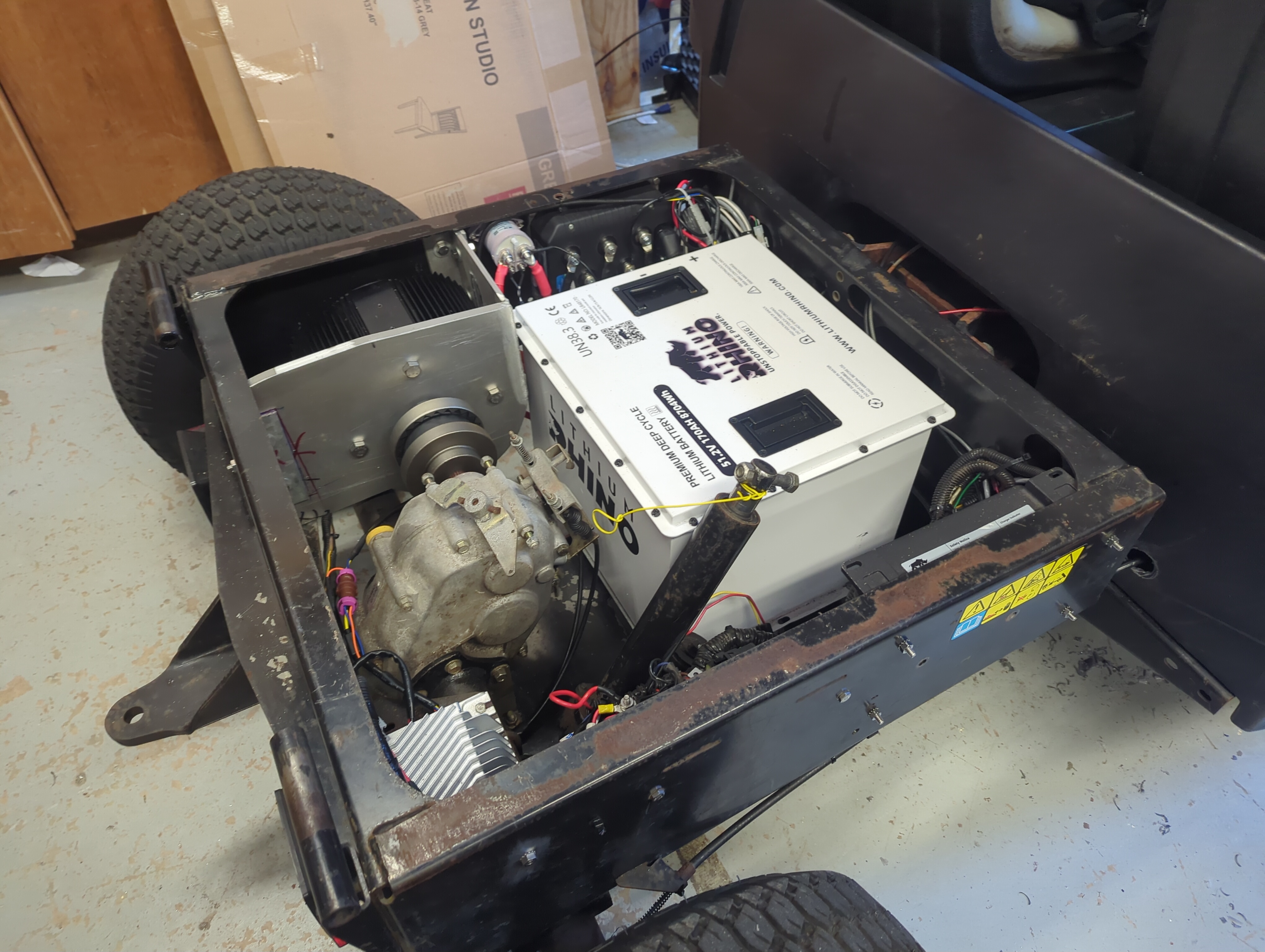
^ All the parts fit! We were afraid we’d have to install the battery under the passenger’s seat.
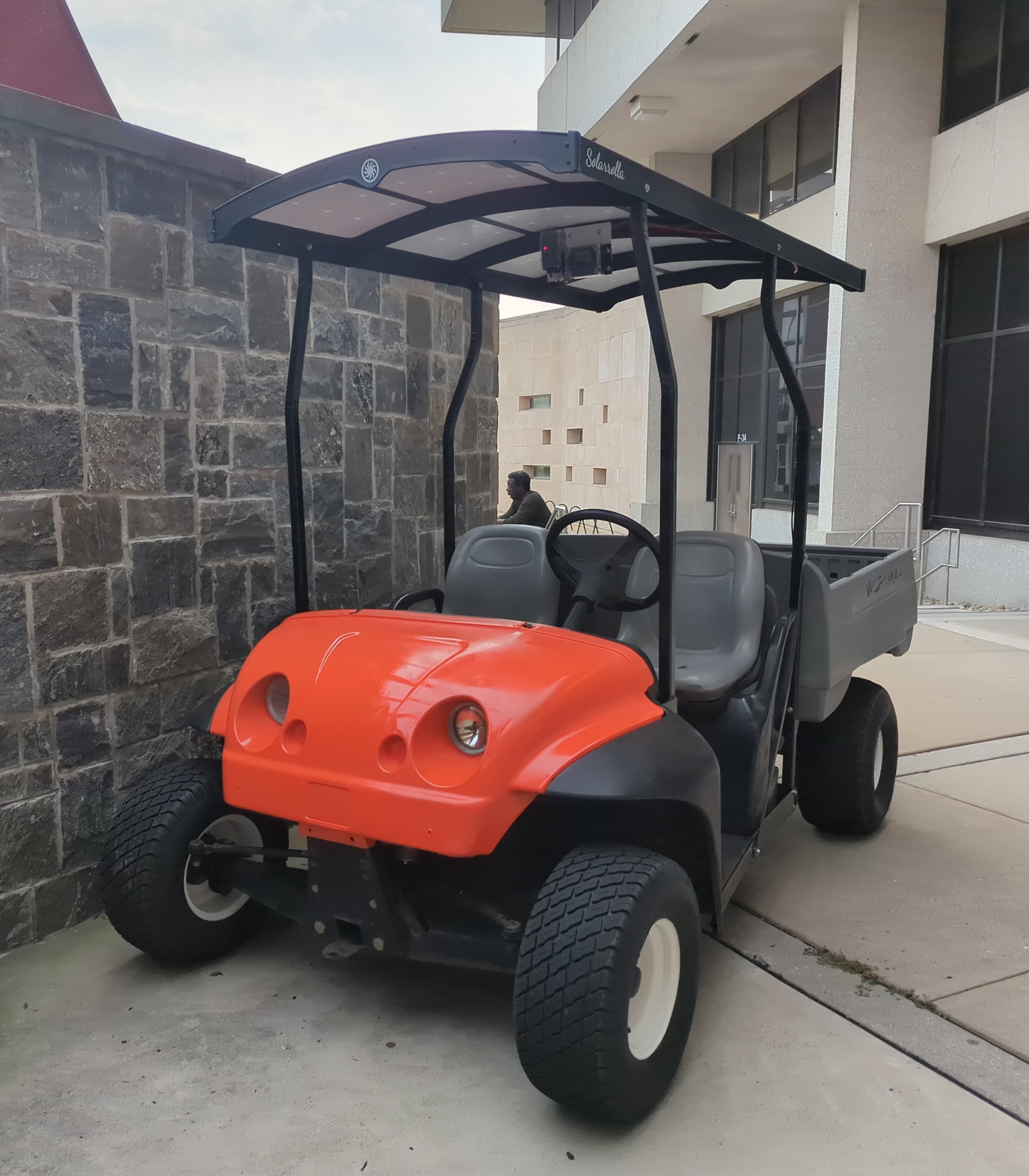
^ The converted utility cart.
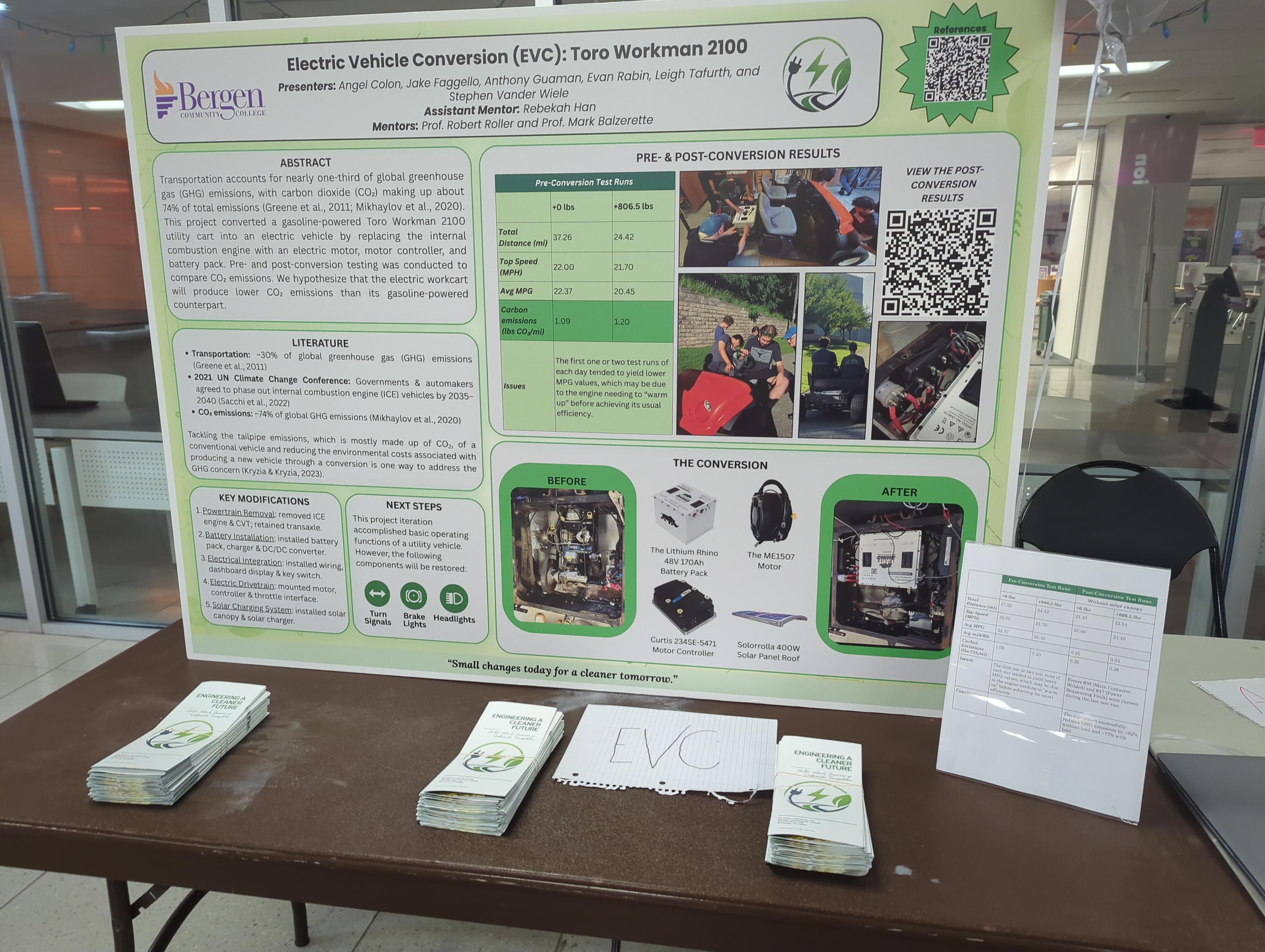
^ Our table setup for the STEM C^2 Conference.
Interested in reading more? You can check out our engineering report.
We really focused on getting the utility cart finished in time for the conference, so after facing charging issues with the electric motorcycle (a converted Yamaha FZ600) due to a bad battery cell, our focus completely shifted to the Workman. That is to say, we implemented the BMS and performed an initial test run to confirm operation. The top speed reached was 29.1 MPH. It was very underpowered. The motor controller also overheated, reducing power to the motor. It’s weak performance may be due to the gearing ratio, which is currently at 2.875:1. It was advised by the vendor from which we bought the parts from to gear it closer to 5:1. Or, it may be due to an incorrectly programmed motor controller or simply having an underpowered motor and motor controller.
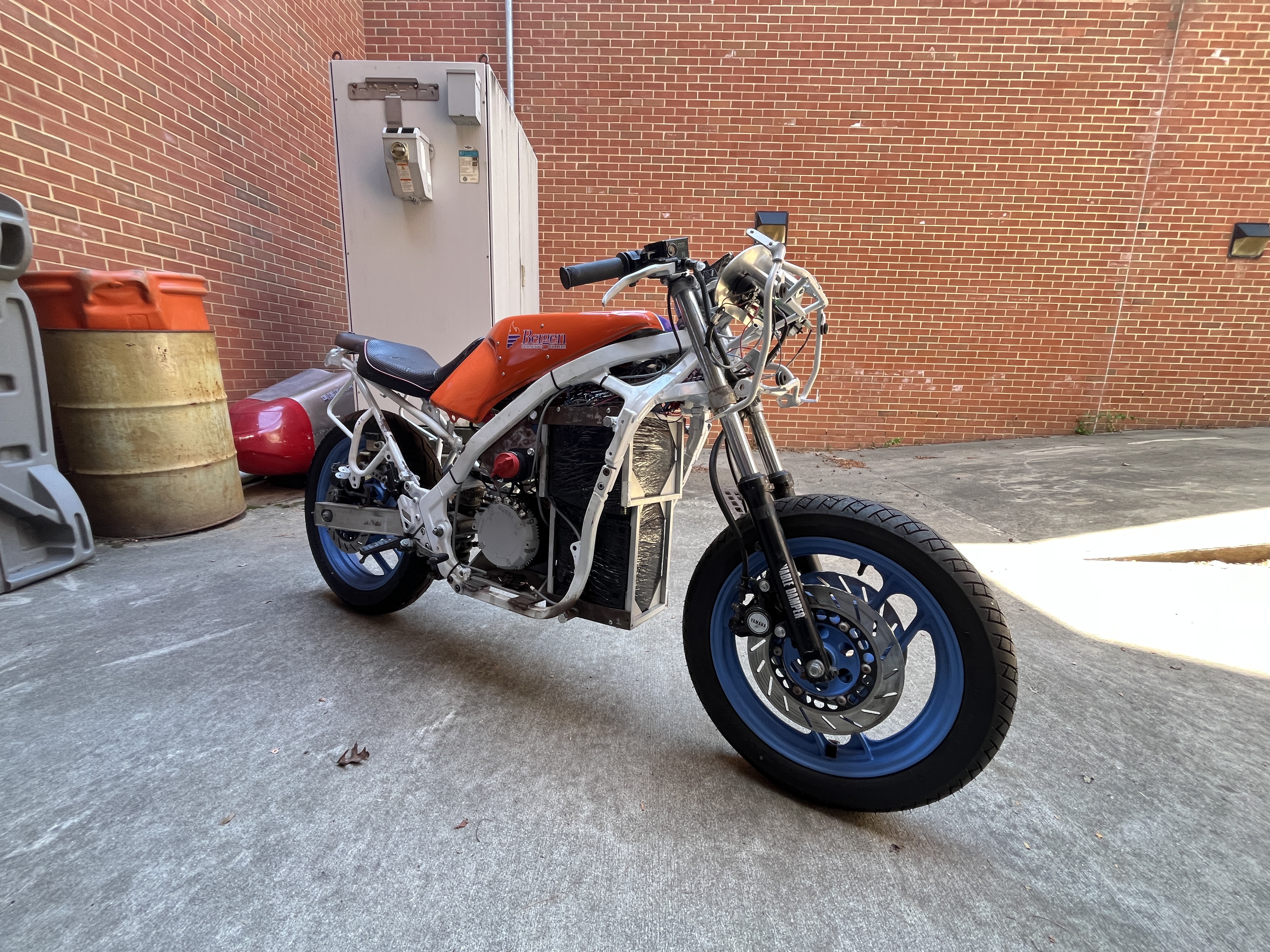
^ The converted Yamaha FZ600.
Despite only coming in once a week (due to spending the other part of my week at Rutgers WINLAB), I had a lot of fun completing a conversion with my team from start to finish. This was probably the fastest conversion yet. Perhaps that’s because we didn’t have to build our own battery pack nor did we have to configure or program a BMS. The next step involves evaluating how much of a benefit the solar canopy is (besides providing the driver with shade).